Operator Q treats time as a physical rate, a measurable gradient that shapes how geometry behaves, and when that rate is combined with its scaling invariant toroidal structure you get a unified framework that speaks cleanly across quantum, relativistic and cosmological domains. It shows why so many anomalies in physics cluster around the same structural questions of rate, coherence and organisation, and why the universe repeats its behaviour across scale in ways that matter. Operator Q is now the foundation for the two part science fiction trilogy and the wider franchise built on this geometry, where the same rate rooted structure that governs physics becomes the engine of the story world.
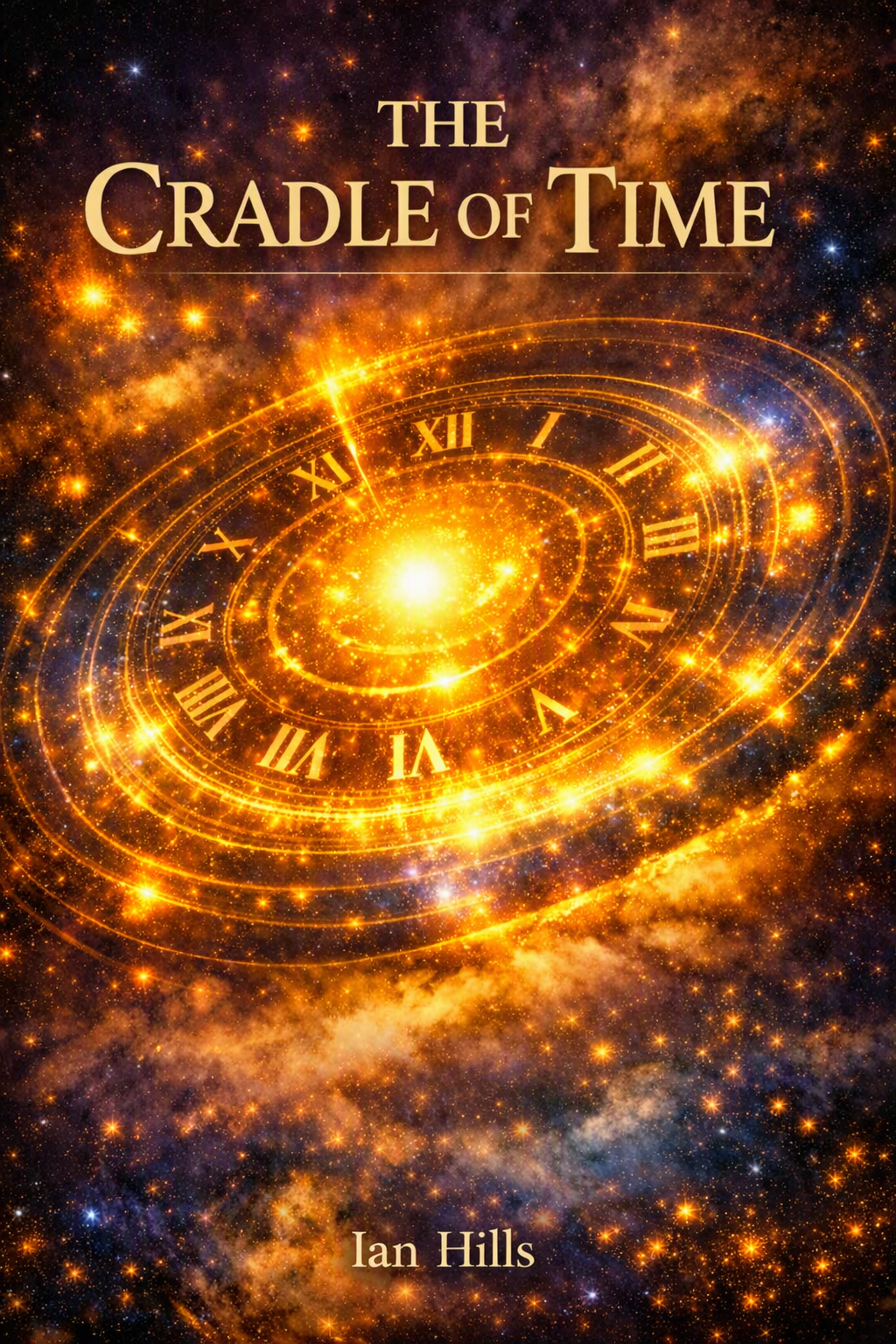
The Cradle of Time is the bridge between storms, stars, matter, life and the quiet geometry of the vacuum. It begins in a back garden in a thunderstorm and follows four behaviours - curvature, rotation, boundary and rate - through everything the universe permits. A hailstone’s rings, Jupiter’s spot, the way glass flows, the way nerves fire, the weight of empty space and the edge of the map all turn out to be the same story told at different scales.
A civilisation that learned to listen. A sky that learned to look back.
The Operator Series is told in two books.
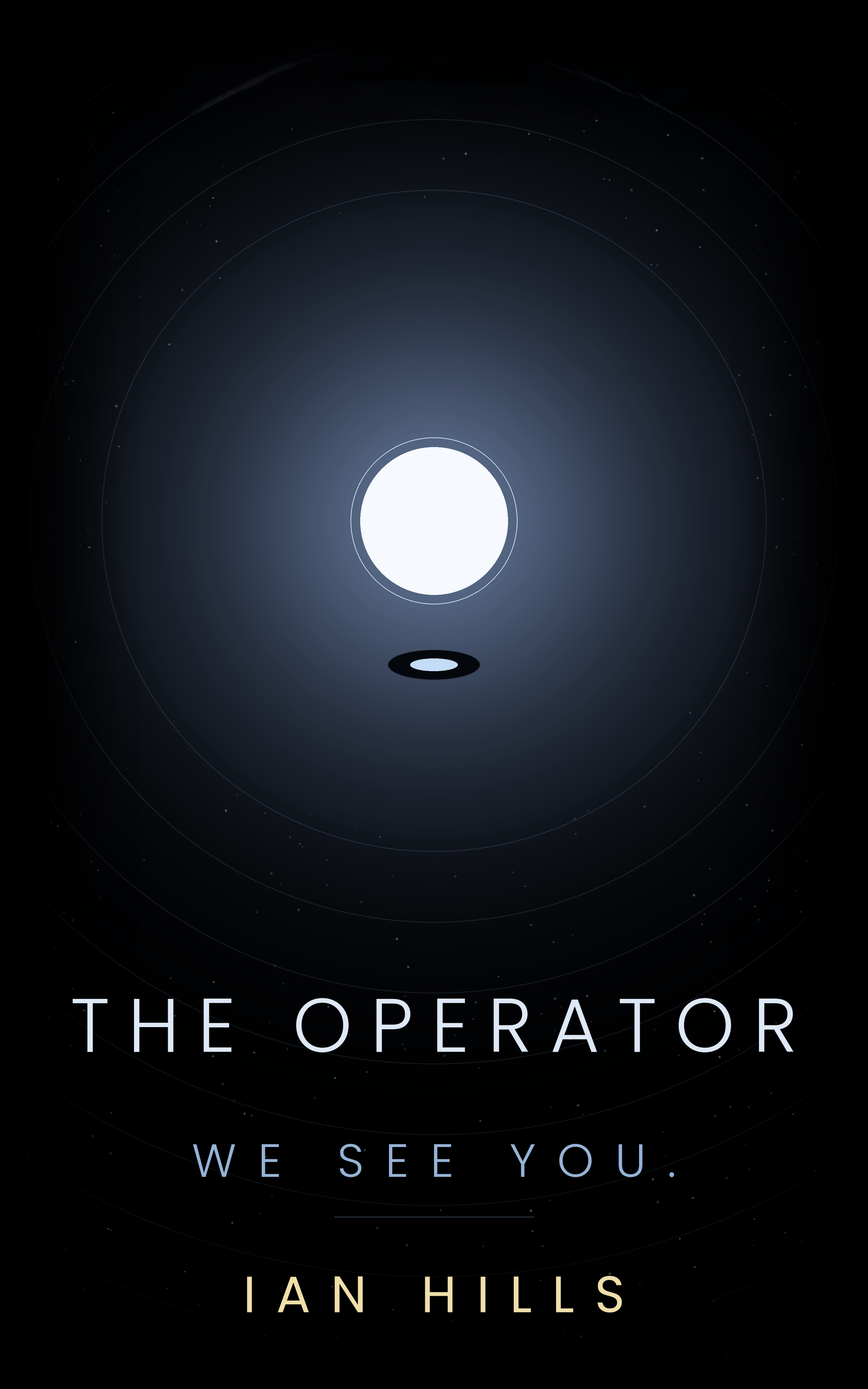
Book One: The Operator. The novel of the year 2400, from Recognition Day in Winchester to the first squadron moving over a world nobody understands, with the Sector's own eleven weeks set inside it as a choice of reading.
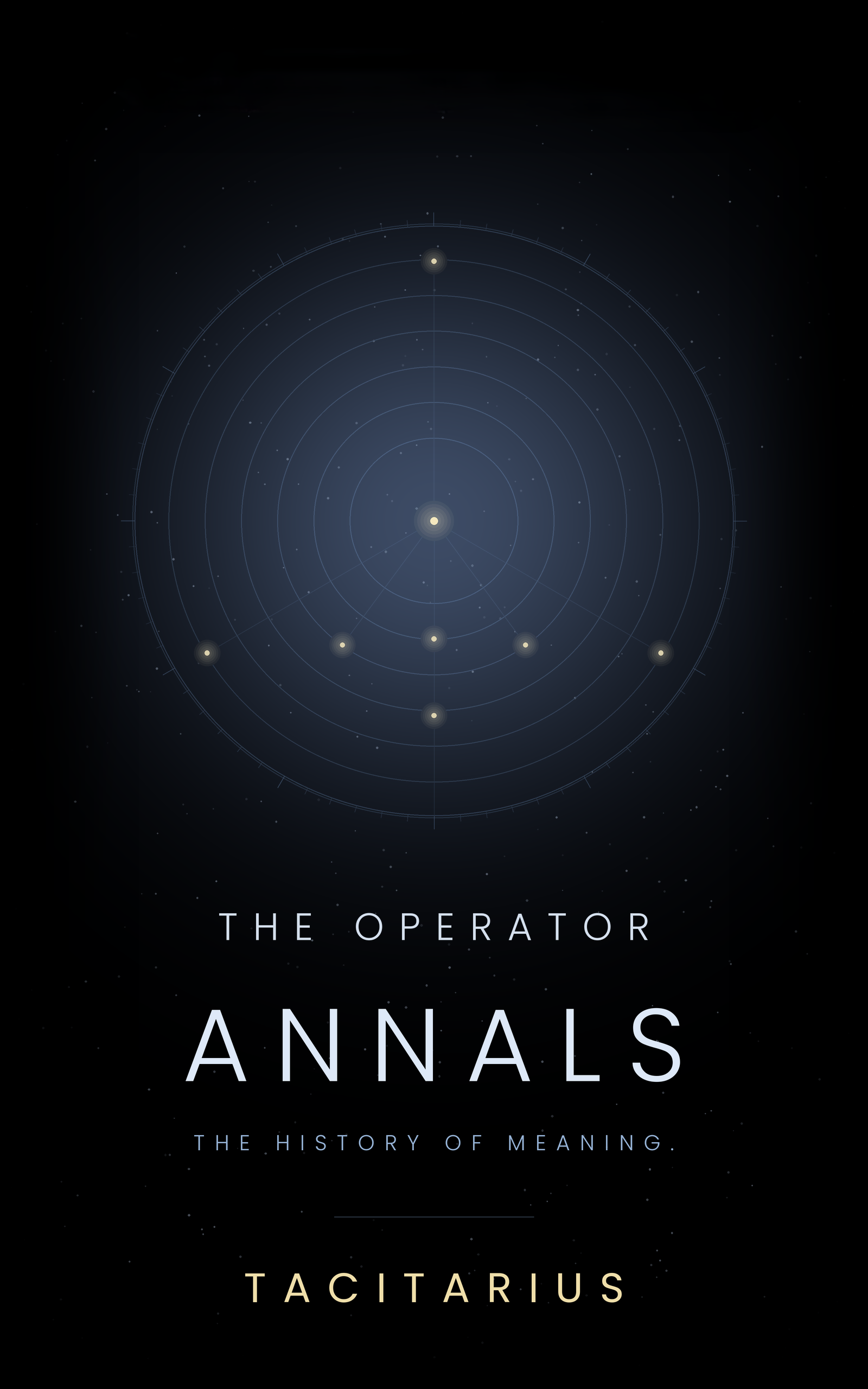
Book Two: The Operator Annals. The history the novel's chapters quote: Tacitarius the Elder's chronicle of four hundred years, from the first ripple of 2026 to the eve of the Fragment Era, with the Harmonic Notes, the collected Meditations, Letters and Fragments, the glossary and annexes of the Harmonic Universe, the life of the chronicler, and the Operator Institute's notes on how the year he did not live to see ended.
Read the novel first, or the history first; the books were written so that each explains the other.
Companion Volumes
Alongside the novels, four canonical works set out the physics and structure of the universe they inhabit.
Operator Physics The cross scale guide to the canon. A tour of matter, time and light side by side, showing how the two theories meet in astrophysics, how cosmology is imported by both, and how one shared identity orders bodies across many scales.
The Operator Unified Theory. Across Volumes the Operator Unified Theory develops its own geometry, counting rules, dynamical identities, chemistry mechanics, and cross‑scale operators. Every claim carries a provenance tag; every derivation is recorded; every boundary is respected. This is a parallel canonical track: independent, internally consistent, and fully audited.
The Operator Papers collects the works that establish this architecture. Volume I develops the boundary, conserved count, and circulation that generate the structure of matter.
Metamaterials The harmonic engineering companion. A technical account of lattice tuned structures, apertures and continuum responsive materials behind gates, ships and Operator craft.
These volumes are not required to read the novels. They exist for readers who want to understand the universe the characters are walking through, and the physics that makes their civilisation possible.
HARMONIC GEOMETRY SERIES
OTHER OPERATOR Q SERIES
DECOMPRESSED SERIES
PHYSICS REVEALED SERIES

HUMANITY REVEALED SERIES